
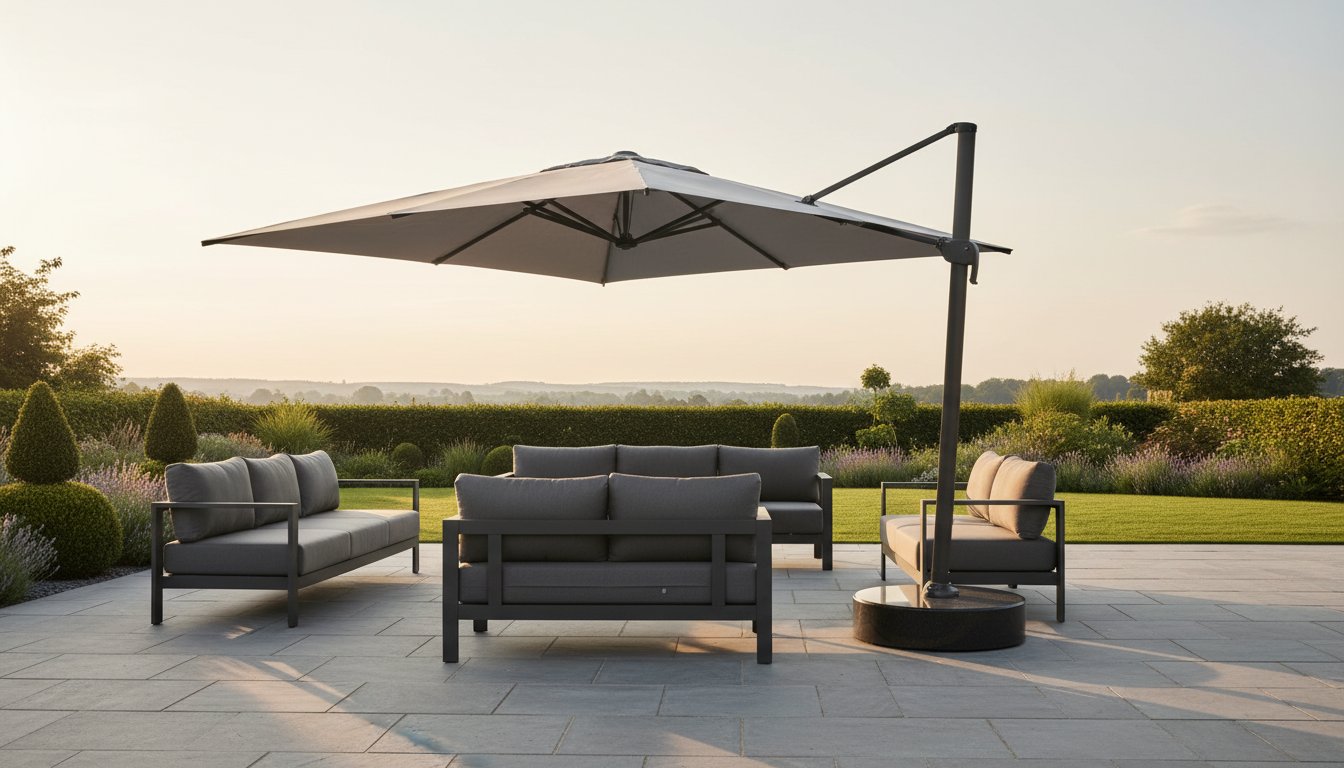
The perfect outdoor living space is a study in refined detail. It is an extension of your home, curated for both sophisticated entertaining and quiet relaxation. Yet, the practicalities of selecting the ideal garden parasol & base can present a challenge. Concerns over stability in the British weather, correct sizing for your furniture, and the longevity of materials can detract from the creative process. A poorly chosen parasol compromises not only the aesthetic of your sanctuary but also its safety.
This guide removes the uncertainty. We will provide the essential knowledge to select a parasol and base that deliver enduring performance without sacrificing elegant design. Learn to assess quality, ensure stability, and choose the ideal dimensions for your dining table or lounge set. The result is a confident investment, empowering you to create the shaded, comfortable, and impeccably styled garden you envision.
Key Takeaways
- Understand the distinct functional and aesthetic merits of centre pole versus cantilever designs to select the ideal silhouette for your outdoor space.
- Acknowledge the critical role of the base; discover how to select the correct weight to ensure absolute stability and safety for your parasol.
- The choice of canopy fabric and frame material directly impacts longevity and visual appeal; evaluate key differences to find the perfect garden parasol & base.
- Implement simple care and maintenance routines to protect your investment and preserve the refined appearance of your parasol for years to come.
Understanding Parasol Styles: Centre Pole vs. Cantilever
Selecting a garden parasol is a defining choice for any outdoor space. The decision extends beyond mere shade to influence the functionality and aesthetic of your patio or garden. Two primary styles dominate the landscape: the traditional Centre Pole and the versatile Cantilever. While the fundamental concept has changed little throughout the history of the parasol, understanding the distinction between these modern interpretations is key to creating a cohesive and elegant outdoor arrangement. The correct style choice ensures your parasol integrates seamlessly with your furniture layout, enhancing both comfort and design.
The Classic Centre Pole Parasol
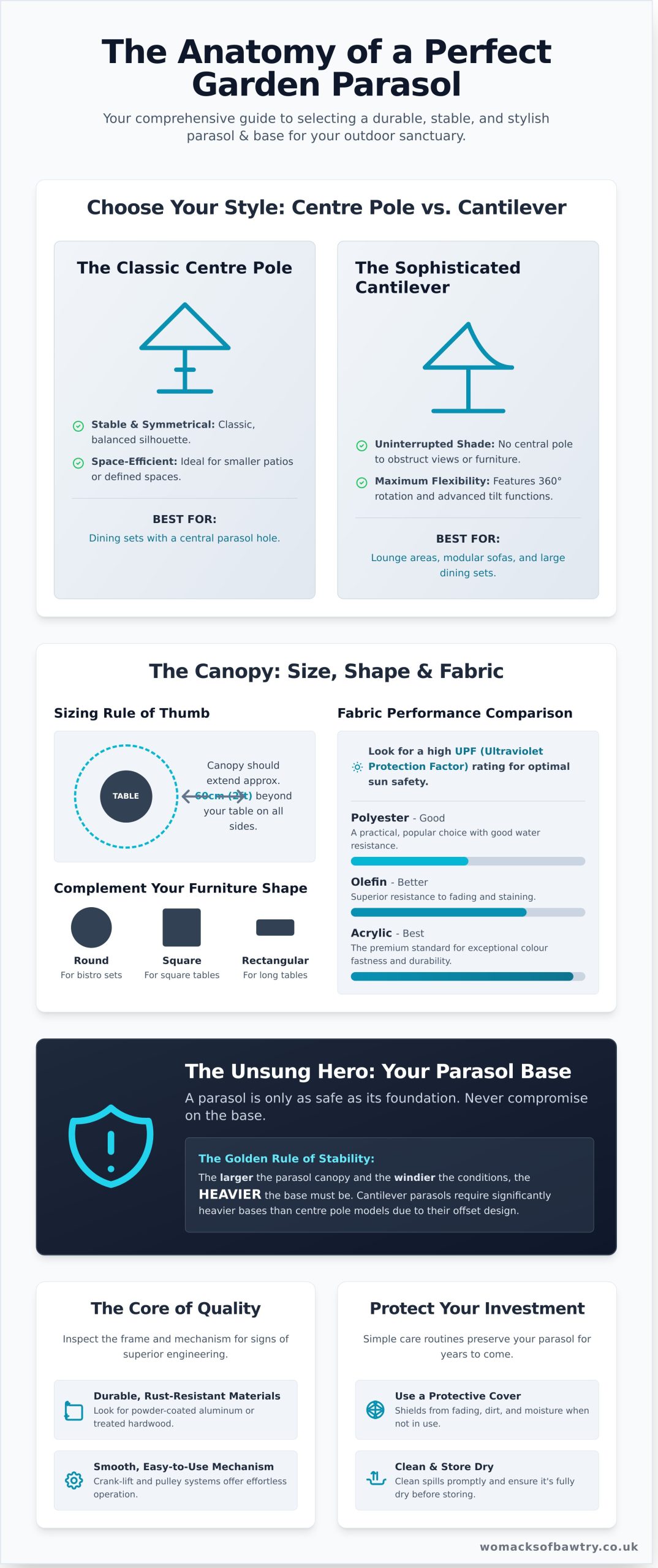
This timeless design features a straight pole extending from a weighted base, often through the centre of a dining table, to the canopy. It is the ideal companion for traditional garden dining sets with a purpose-built central aperture, creating a stable and symmetrical silhouette. Its straightforward engineering ensures reliability and ease of use. Away from a table, it provides a focused point of shade in any open space, available in sizes from compact patio models to expansive garden designs.
The Sophisticated Cantilever (Overhanging) Parasol
The cantilever parasol represents a modern evolution in outdoor design. Its offset pole and overhanging canopy provide uninterrupted shade, making it perfect for lounge areas, modular sofas, or dining sets without a central hole. This design offers superior flexibility, with many models featuring advanced tilt functions and 360-degree rotation to track the sun. Due to its physics, a complete cantilever garden parasol & base requires a significantly heavier, more substantial foundation to ensure perfect stability.
Choosing the Right Style for Your Space
The optimal choice is dictated by your garden’s layout and intended use. Consider these key points to guide your selection:
- For Centralised Dining: The Centre Pole parasol is the classic choice for tables with a central hole, offering stability and a traditional aesthetic.
- For Lounge & Modular Sets: The Cantilever provides unobstructed shade, making it the superior option for relaxed seating areas where a central pole would be an intrusion.
- Measure Your Space: Ensure the canopy diameter is sufficient to cover your desired area, accounting for the sun’s movement throughout the day. A well-chosen garden parasol & base is an investment in comfort.
- Assess Sightlines: Consider how the parasol’s structure, particularly the larger base of a cantilever, will impact views and pathways within your garden.
The Canopy: Selecting the Ideal Size, Shape, and Fabric
The canopy is the most prominent element of any garden parasol, defining its aesthetic while delivering essential shade. The choice of canopy is a considered balance between visual appeal and high-performance functionality, ensuring your investment offers both enduring style and reliable protection. A well-chosen canopy transforms your outdoor dining or lounge area into a sophisticated and comfortable retreat.
Determining the Correct Size and Shape
To ensure adequate coverage, a simple rule of thumb is to select a canopy that extends approximately 60cm (2 feet) beyond your table on all sides. The shape should complement your furniture arrangement. Classic round canopies are ideal for bistro sets and circular tables, while square or rectangular designs provide more comprehensive coverage for longer dining tables and modular seating. Before finalising your choice, measure your space to confirm sufficient height clearance and distance from walls or fences.
Understanding Canopy Fabrics and UV Protection
The quality of the canopy fabric dictates its longevity and protective capabilities. Look for a high Ultraviolet Protection Factor (UPF) rating, which indicates how effectively the material blocks harmful UV radiation. Investing in a quality fabric is crucial for effective sun protection, a key function of any premium parasol. Consider these common materials:
- Polyester: A practical and popular choice, offering good water resistance and durability.
- Olefin: Delivers superior resistance to fading and staining, making it an excellent all-around option for the British climate.
- Acrylic: The premium standard in canopy fabrics, providing exceptional colour fastness and robust defence against the elements.
Colour and Design Considerations
Your canopy colour should harmonise with your existing outdoor furniture and garden aesthetic. Timeless neutrals like ecru, charcoal, and taupe offer understated sophistication that complements any design scheme. For a more striking effect, a statement colour such as deep navy or forest green can create a deliberate focal point. Pay attention to functional details; a wind vent is essential for stability, allowing gusts to pass through without unsettling the entire garden parasol & base. A valance-the decorative fabric flap around the edge-can add a classic, elegant finish to the design.
Discover the perfect fusion of form and function for your outdoor sanctuary. Explore our curated collection of elegant garden parasols.
The Unsung Hero: A Guide to Choosing the Right Parasol Base
A statement garden parasol provides elegant shade, but its performance is entirely dependent on its foundation. The base is not an accessory; it is a critical component for safety, stability, and longevity. Selecting the correct garden parasol & base combination ensures your investment remains secure and your outdoor sanctuary remains serene, even when the British weather is unpredictable.
Why a Heavy-Duty Base is Non-Negotiable
The large canopy of a parasol acts like a sail, catching the wind and creating significant upward lift and leverage. An inadequate base can lead to tipping, damage to your furniture, or worse, the parasol becoming a dangerous projectile. This risk is why adhering to new parasol wind safety standards is so important for public and private spaces. Always consider the manufacturer’s weight recommendation as the absolute minimum for calm conditions, not a guarantee against strong gusts.
Calculating the Correct Base Weight
The required weight is determined by canopy size and placement. Freestanding parasols require a much heavier base than those secured through the centre of a sturdy patio table, which offers additional stability.
- Parasol up to 2m: 25kg+ Base (Freestanding) / 15kg+ (Through-Table)
- Parasol 2m to 3m: 50kg+ Base (Freestanding) / 25kg+ (Through-Table)
- Parasol 3m+: 70kg+ Base (Freestanding) / 35kg+ (Through-Table)
Note: Cantilever or side-arm parasols have unique physics and demand specific, often much heavier, bases, typically 90kg or more. Always follow the specific product guidance.
Base Materials and Styles
The choice of material affects both aesthetics and performance. For a refined outdoor setting, a solid, heavy-duty base is the superior choice.
Polished Granite & Concrete: These materials offer substantial weight and a premium, contemporary finish. They are exceptionally durable and resistant to the elements, grounding your garden parasol & base with understated elegance.
Cast Iron: Often featuring classic, ornate designs, cast iron bases provide timeless style and reliable weight.
Fillable Bases: Typically made from plastic and filled with water or sand, these are a functional, portable option. However, they lack the premium feel and absolute stability of their solid counterparts. Select models with integrated wheels for effortless repositioning of heavier bases.
Frame Materials and Mechanisms: The Core of Quality
While the canopy provides the colour and protection, the structural integrity of a garden parasol is defined by its frame and operating mechanism. This core construction dictates the parasol’s longevity, stability, and ease of use. Choosing the right materials is not merely a practical decision; it is a long-term investment in uncompromising quality and enduring style for your outdoor space.
Frame Construction: A Foundation of Style
The material of the frame impacts durability, weight, and visual appeal. Each offers a distinct character to complement your garden furniture.
- Hardwood: Often crafted from teak or eucalyptus, wooden frames offer a classic, warm aesthetic. They are robust and timeless but require occasional treatment with teak oil to maintain their rich colour and protect against the elements.
- Aluminium: A modern and highly practical choice. Aluminium is lightweight, inherently rust-resistant, and strong. For a superior finish and enhanced durability, look for powder-coated aluminium frames that provide a sleek, contemporary look.
- Powder-Coated Steel: Valued for its exceptional strength, steel is a common choice for larger, heavy-duty parasols. The powder coating provides essential protection, though it can be susceptible to rust if scratched or chipped.
Effortless Operation: Opening Mechanisms
The mechanism determines how easily you can enjoy your shade. Simplicity and reliability are the hallmarks of a well-designed parasol.
- Push-Up: A simple, manual system found on smaller, more traditional parasols. The canopy is pushed up the pole by hand until it locks into place.
- Pulley System: Utilising a rope and pulley, this system offers a mechanical advantage, making it easier to open heavier canopies than a standard push-up model.
- Crank Wind: The most convenient and effortless option. A simple winding handle smoothly opens and closes the canopy, making it ideal for parasols of all sizes, especially larger models.
Refined Features for Ultimate Comfort
Advanced features elevate a parasol from a simple shade provider to a sophisticated garden accessory. These refinements offer superior control and extended usability.
- Tilt Function: This essential feature allows you to angle the canopy, ensuring you remain shaded as the sun moves across the sky without repositioning the entire parasol.
- 360-Degree Rotation: A signature feature of premium cantilever models. It allows the canopy to be rotated around the pole, redirecting shade with ease and avoiding the need to move the heavy garden parasol & base.
- Integrated LED Lighting: Subtle, built-in LED lights, often solar-powered or rechargeable, transform your parasol for the evening, creating an inviting ambiance for dining or relaxing after dark.
Selecting the ideal combination of frame, mechanism, and features ensures your garden parasol & base will not only look exceptional but will perform flawlessly for years to come. Explore the curated collections at Womacks Of Bawtry to discover designs where superior engineering meets sophisticated style.
Care and Maintenance: Protecting Your Investment
A quality parasol is a defining feature of a sophisticated outdoor space. Protecting this investment is essential to ensure its longevity and enduring style. With consistent and straightforward care, your garden furniture will retain its functional integrity and aesthetic appeal for many seasons.
Routine Cleaning and Fabric Care
Regular cleaning prevents the build-up of dirt and mildew, preserving the canopy’s colour and condition. For most fabrics, a simple solution of mild soap and lukewarm water is effective. Gently brush the surface to remove loose debris, apply the solution with a soft cloth, and rinse thoroughly with clean water. Always allow the canopy to air dry completely before closing. The frame and base simply require a wipe-down with a damp cloth to maintain their finish.
Wind Precautions and Storage
Prudence is paramount in the unpredictable British weather. Always lower your parasol in windy conditions to prevent stress on the frame and mechanism. When not in use, a protective cover is the most effective way to shield the fabric from UV degradation and moisture. Browse our durable covers to protect your garden furniture. For off-season storage, ensure the entire garden parasol & base is clean and perfectly dry before placing it in a sheltered, upright position.
Inspecting for Wear and Tear
Periodic inspection maintains safety and operational integrity. We recommend checking key components monthly during periods of frequent use:
- Frame and Ribs: Check for any signs of bending or stress at the joints.
- Mechanisms: Ensure the crank, pulley, and tilt functions operate smoothly.
- Canopy: Look for any small tears or signs of fabric fatigue.
- Base: Confirm all fittings are secure and the base is stable.
Addressing minor issues promptly prevents more significant damage. For complex mechanical faults with your garden parasol & base, we advise seeking professional assistance to ensure a safe and lasting repair.
Creating Your Perfect Outdoor Sanctuary
Choosing the perfect parasol is an exercise in balancing refined aesthetics with enduring function. As we’ve detailed, understanding the core differences between a classic centre pole and a versatile cantilever design is the first step. This, combined with selecting the right canopy fabric and, most importantly, a correctly weighted base, ensures both safety and style for your garden.
A high-quality garden parasol & base is not merely a purchase, but a lasting investment in your outdoor sanctuary. At Womacks of Bawtry, we share this philosophy. Our curated collections of designer outdoor furniture are selected for their superior craftsmanship and use of high-quality, durable materials, ensuring your chosen piece endures for years to come.
Should you require further guidance, our interior design team is always available to offer expert advice. When you are ready to elevate your space, we invite you to discover our collection of statement garden furniture and parasols. Create your perfect outdoor retreat and enjoy the British summer in impeccable style.
Frequently Asked Questions
How heavy should my parasol base be for a 3-metre parasol?
For a 3-metre parasol, stability is paramount. We recommend a base of at least 50kg for freestanding models to ensure safety in breezy conditions. If the parasol is secured through a sturdy garden table, a 35kg base may suffice. Investing in the correct garden parasol & base combination is essential for performance and longevity, protecting your statement piece from potential damage and ensuring it remains a secure fixture in your outdoor space.
What is the difference between a centre pole and a cantilever parasol?
A centre pole parasol features a straight, central mast, making it the classic choice for dining sets where the pole fits through a table. A cantilever, or side-post, parasol has an arched or jointed pole positioned to the side. This design offers unobstructed shade and greater positioning flexibility over lounge furniture or modular seating arrangements. The choice depends entirely on your space, your furniture configuration, and your functional requirements for shade.
Can I leave my garden parasol outside all year round?
We strongly advise against leaving your garden parasol outdoors throughout the year. The UK’s harsh winter conditions, including high winds, rain, and frost, can damage the frame and canopy fabric. For optimal longevity, the parasol should be cleaned, dried, and stored in a sheltered space during autumn and winter. Using a quality, weather-resistant cover is also recommended during the summer months to protect against sun-fading and environmental debris.
What does the UPF rating on a parasol canopy mean?
UPF stands for Ultraviolet Protection Factor. This rating indicates how effectively the canopy fabric blocks harmful UVA and UVB radiation from the sun. A higher UPF rating provides greater protection for your skin. For example, a fabric with a UPF 50+ rating, the highest classification, blocks over 98% of solar rays. This premium level of protection is essential not only for personal safety but also for preventing the fading of your outdoor furniture cushions.
How do I clean my parasol canopy without damaging it?
To clean your canopy, first brush away any loose dirt. Prepare a solution of lukewarm water and a mild detergent. Gently clean the fabric using a soft-bristled brush, working in sections. Rinse thoroughly with clean, cool water to remove all soap residue, as this can attract more dirt. Allow the canopy to air dry completely in an open position before storing to prevent mildew. Avoid using bleach, harsh chemicals, or pressure washers which can damage the protective coating.
Is an aluminium or wooden parasol frame better?
The choice between aluminium and wood is one of aesthetic preference and maintenance. Aluminium frames are lightweight, corrosion-resistant, and often feature convenient crank and tilt mechanisms. They offer a clean, contemporary look. Hardwood frames provide a classic, natural elegance and are exceptionally strong, though they require periodic treatment with a suitable oil to maintain their appearance. Consider the style of your existing garden furniture to make a cohesive choice.