
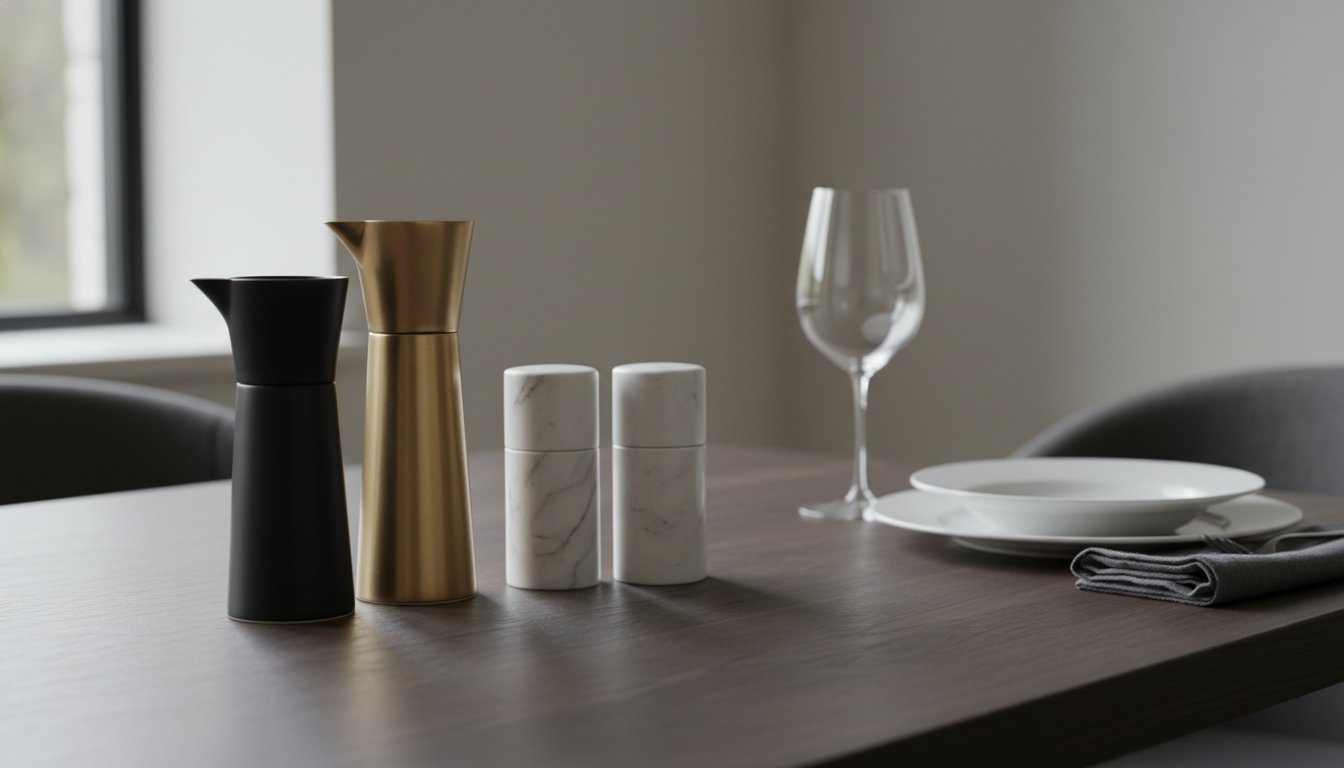
The art of a truly refined tablescape lies in the details. While statement dinnerware and elegant glassware command attention, the standard salt and pepper shaker can often detract from an otherwise curated aesthetic, leaving the setting feeling incomplete. This is where the transformative power of a well-chosen cruet set comes into play. More than mere dispensers for oil, vinegar, and seasonings, these pieces are functional sculptures, capable of unifying your dining décor and making a quiet, confident statement.
In this guide, we navigate the world of luxury cruets, exploring the distinct character of materials from classic ceramic to modern hammered metal. We provide the essential insight needed to select an exquisite set that not only complements your existing collection but acts as a definitive finishing touch. Discover how to confidently choose a design that elevates your tablescape, transforming every meal into a polished and sophisticated dining experience.
Beyond Seasoning: The Cruet Set as a Statement of Style
A dining table is a curated space. While dinnerware and linens form the foundation, it is the smaller details that articulate true style. A cruet set is not merely a functional vessel for condiments; it is a key design element, the final piece of jewellery that completes a tablescape. It speaks of an attention to detail that elevates the entire dining experience, transforming a simple meal into a considered occasion.
The impression this makes on guests is immediate and significant. A thoughtfully chosen set, crafted from marble, polished metal, or fine ceramic, demonstrates a commitment to quality. It stands in stark contrast to the visual disruption of mismatched, store-bought bottles. To present condiments in this way is to invest in refinement, signalling that every aspect of the gathering has been considered with care-an ethos embodied by fine dining destinations like Baan Dum Oceanfront Seafood.
The History of the Cruet: From Function to Fine Dining
The role of the Cruet in dining has deep historical roots, originally designed as a pair of small containers for holding oil and vinegar. Over centuries, this functional pairing evolved. The concept expanded to include salt and pepper, becoming a staple of formal table settings. This history informs their status today, representing a tradition of hospitality and a respect for the rituals of fine dining.
What to Include: Salt, Pepper, Oil, and Vinegar
A comprehensive cruet set traditionally houses four key elements. The essentials for any table are, of course, salt and pepper. For daily dining or minimalist settings, a simple, elegant pair is often sufficient. However, for entertaining, the inclusion of fine olive oil and aged balsamic vinegar introduces a new layer of sophistication. Offering these allows guests to dress salads or finish dishes to their taste, a gesture of both generosity and impeccable hosting.
A Study in Materials: Selecting a Set with Timeless Appeal
The material of a cruet set defines its very essence. It is the foundation of its aesthetic character, its longevity, and the tactile experience it offers with every use. Before choosing, consider the existing materials on your dining table-the finish of your cutlery, the texture of your dinnerware, and the style of your glassware. The right material will not just complement, but complete your curated tablescape.
The Clarity of Glass and Crystal
Glass offers a clean, non-porous, and timeless appeal. Its transparency is ideal for showcasing high-quality contents, from golden olive oils to vibrant peppercorns, turning the functional into a visual feature. This versatility allows a glass set to integrate seamlessly into both modern and traditional settings. For occasions of elevated formality, cut crystal is the definitive choice. Its intricate facets refract light, adding a layer of sophistication reminiscent of the grand Victorian and Edwardian cruet sets that once served as dining table centrepieces.
The Earthy Appeal of Ceramic and Stoneware
For a table with a rustic, farmhouse, or Mediterranean-inspired aesthetic, ceramic and stoneware provide unparalleled warmth and character. These materials offer a rich palette of finishes, from organic, matte glazes that absorb light to high-gloss sheens that add a touch of polish. A stoneware cruet set often possesses an artisanal, handcrafted feel, where subtle variations in form and finish are not imperfections, but marks of unique quality. While durable, they bring an earthy, grounded presence to the dining experience.
The Sleek Finish of Metal and Marble
Metal and marble make a resolutely modern statement. Materials like polished stainless steel and chrome connect directly with a contemporary, minimalist design language, prized for their durability and ease of cleaning. Marble, however, stands as the pinnacle of sophistication. Each piece is unique, with natural veining that renders it a small sculpture for the table. The satisfying weight and cool, smooth touch of these materials transform a simple seasoning ritual into a moment of understated luxury.
Matching Style to Setting: A Curated Approach
An interior designer views every object as part of a larger composition. The dining table is not an island; it is the heart of a room, and its accessories must speak the same visual language as the space around it. The right cruet set is more than a vessel for oil and vinegar; it is a piece of functional sculpture, a final detail that anchors your aesthetic. Consider your dining room’s dominant textures, lines, and colour palette. Is it defined by clean metal and glass, warm woods, or the lustre of polished silver? This is your starting point for a cohesive choice.
For the Modern Minimalist
This aesthetic demands purity of form. Look for a cruet set defined by clean lines and an absence of ornamentation. The focus is on material and silhouette, creating a sense of calm and order on the tabletop. An ideal choice for contemporary dining spaces, open-plan living, and uncluttered interiors.
- Materials: Brushed steel, matte black ceramic, concrete, or clear borosilicate glass.
- Forms: Simple geometric shapes-cylinders, cubes, and elegant curves.
- Palette: Monochromatic and neutral tones. Think charcoal, white, and metallic finishes.
For the Classic Traditionalist
Elegance and heritage are the cornerstones of this style. A traditional cruet set should feel substantial and timeless, echoing the refinement of formal dinnerware. The enduring appeal of these materials is well-documented; a look into the history of Georgian cruet sets reveals a long-standing appreciation for finely worked silver and glass. This choice complements formal dining rooms with dark woods and rich textiles.
- Materials: Cut glass, polished silver or silver-plate, and fine porcelain.
- Forms: Classic bottle shapes, often held in an ornate caddy or stand.
- Details: Subtle etching, delicate handles, and compatibility with traditional silverware patterns.
For the Rustic Farmhouse Enthusiast
This style celebrates warmth, texture, and a connection to natural materials. The ideal set has a tactile quality-a sense of the handcrafted and the authentic. It is perfectly imperfect, adding character and an inviting feel to the table. It pairs beautifully with natural linen, simple stoneware, and wooden serving boards.
- Materials: Glazed stoneware, olive wood, hammered metal, or thick, recycled glass.
- Feel: Earthy, robust, and tactile with a visible handcrafted quality.
- Details: Organic shapes, natural grain patterns, and warm, muted colour palettes.
Explore our Home Accessories collection to discover the final detail for your dining aesthetic.

Functionality Meets Form: Practical Considerations for Daily Use
A statement cruet set can be a defining feature of your tablescape, but its aesthetic value is lost if it is impractical for daily use. The most elegant design is quickly diminished by a clogged shaker, a dripping oil bottle, or a difficult refilling process. Before purchasing, consider how the set will integrate into your dining rituals. The ideal choice is a seamless blend of sophisticated form and effortless function.
Size, Scale, and Ergonomics
The proportions of your cruet set should be in harmony with your dining table. A large, commanding set can overwhelm the intimate setting of a small bistro table, just as a delicate, minimalist design might feel insignificant on an expansive formal dining surface. Beyond visual scale, consider the ergonomics. The bottles and shakers should feel balanced and comfortable in hand, allowing for a precise and controlled pour every time.
Ease of Cleaning and Refilling
Maintaining the pristine condition of your condiments and their containers is essential. To avoid frustration, look for practical design features that simplify upkeep.
- Refilling: Vessels with wide mouths are significantly easier to refill, eliminating the need for a separate funnel and reducing the chance of spills.
- Cleaning: Determine if the materials are dishwasher-safe for convenience or if they require specific hand-washing to protect delicate finishes or natural materials like wood.
- Oil & Vinegar Care: To prevent residue build-up in oil and vinegar bottles, a regular rinse with warm, soapy water is recommended. Ensure they are completely dry before refilling to maintain the integrity of the contents.
The Tray or Stand: A Unifying Element
Often overlooked, the tray or stand is a crucial component of a well-designed cruet set. It serves a dual purpose: organising the individual pieces into a single, tidy unit and providing a stable base. The material of the stand-whether polished chrome, natural slate, or warm acacia wood-can complement your dinnerware and linens. Practically, it allows the entire set to be carried to and from the table with ease, ensuring your seasonings are always elegantly presented and readily available. Explore our curated collection of dining accessories to discover pieces that master this balance of form and function.
The Final Touch: Curating Your Tabletop
A cruet set is far more than a simple vessel for condiments; it is a defining detail in your dining narrative. As we have explored, selecting the right piece requires a considered approach. Balancing timeless materials with a style that complements your existing decor ensures your choice is both functional and a true statement of taste. This final element completes the aesthetic, transforming a simple meal into a curated experience.
At Womacks of Bawtry, we specialise in luxury furniture and designer home accessories. Our collections are expertly curated for the discerning home, presenting pieces that embody quality and sophisticated design. For those seeking a truly cohesive look, our interior design services are available to guide your selection.
Discover the perfect statement piece for your table in our Dining Collection. Elevate every gathering with a detail that reflects your commitment to style.
Frequently Asked Questions
What is traditionally included in a full cruet set?
A traditional set features dispensers for oil and vinegar, alongside shakers for salt and pepper. These four pieces form the classic quartet for table dressing. More extensive collections may also include a pot for mustard or other specific seasonings, often presented in a coordinating stand or caddy. The focus is on essential table condiments, presented with refined uniformity.
How do you properly clean oil and vinegar cruet bottles?
For routine cleaning, use warm, soapy water and a bottle brush to remove residue. For stubborn oil, a mixture of uncooked rice, a drop of washing-up liquid, and warm water is effective. Secure the top and shake vigorously to dislodge buildup. Rinse thoroughly with clean water and allow the bottles to air dry completely before refilling to prevent clouding and maintain clarity.
Can a high-quality cruet set be a good wedding or housewarming gift?
A high-quality cruet set is an exceptional gift for a wedding or housewarming. It represents a gesture of refined taste and practicality, elevating everyday dining. Choosing a set crafted from premium materials like crystal, polished steel, or designer ceramic offers a lasting piece of functional art for the new home. It is a thoughtful contribution to a couple’s collection of statement homeware, appreciated for its daily use and aesthetic appeal.
Should my cruet set match my dinnerware or my cutlery?
The choice is a matter of personal aesthetic. Coordinating your cruet set with dinnerware creates a cohesive, unified tablescape. This approach is classic and harmonious. Alternatively, matching it to your cutlery, particularly if the cutlery has a strong design element like a gold or matte black finish, introduces a sophisticated, curated accent. Consider the set a distinct design element that can either blend seamlessly or provide a deliberate contrast.
How can I stop the salt from clumping in my salt shaker?
To prevent salt from clumping due to humidity, add a few grains of uncooked rice to the shaker. The rice absorbs excess moisture, keeping the salt dry and ensuring it flows freely. This traditional method is highly effective and does not alter the salt’s flavour. For best results, use long-grain rice and replace the grains every few months to maintain optimal performance and hygiene within your shaker.
What is the difference between a cruet set and a condiment set?
A cruet set traditionally refers specifically to vessels for oil and vinegar, often accompanied by salt and pepper shakers. The focus is on liquid seasonings for dressing dishes at the table. A condiment set is a broader term, encompassing a wider range of sauces and seasonings. It might include pots for mustard, ketchup, or other table sauces, often presented together in a caddy for convenience and service.